



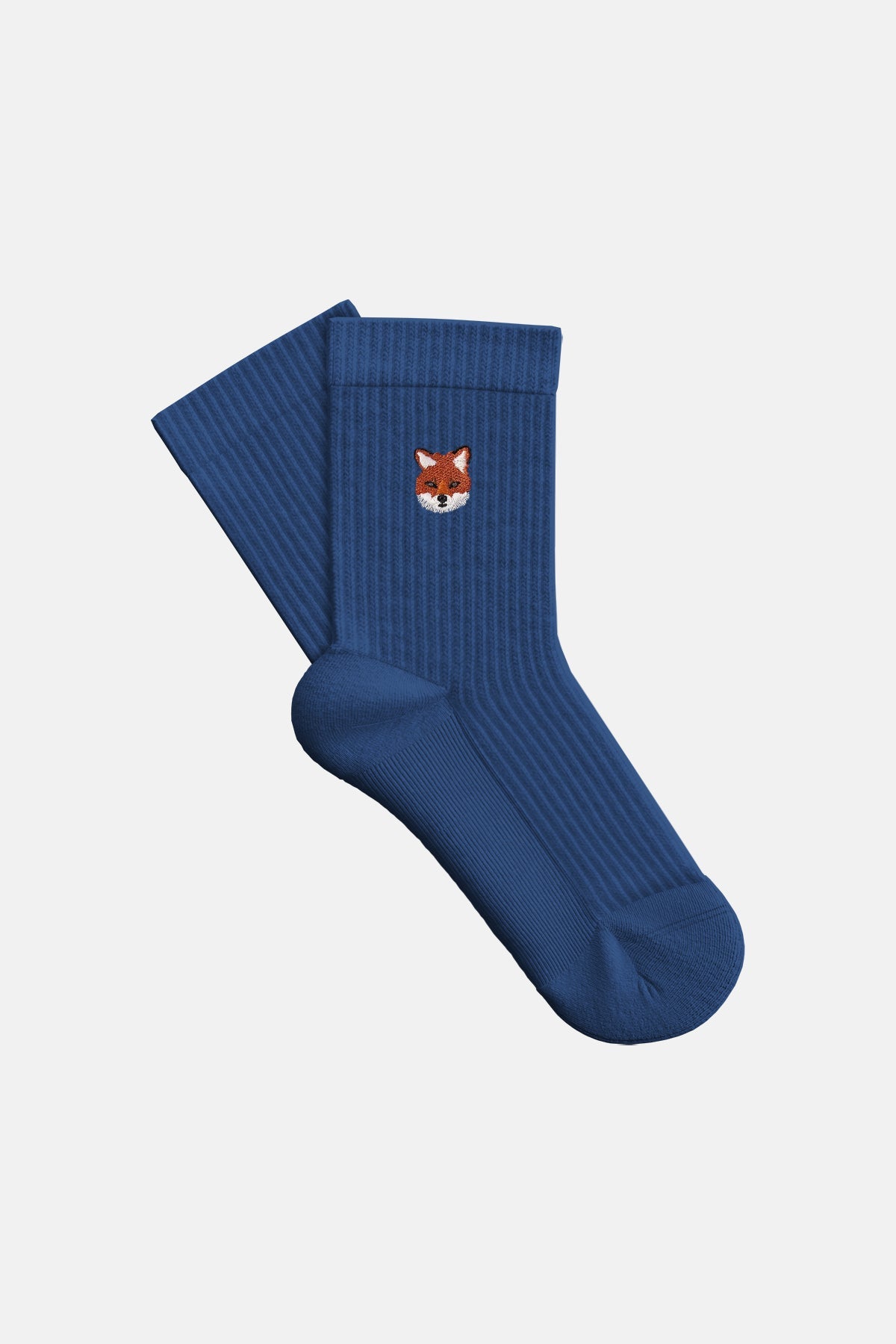
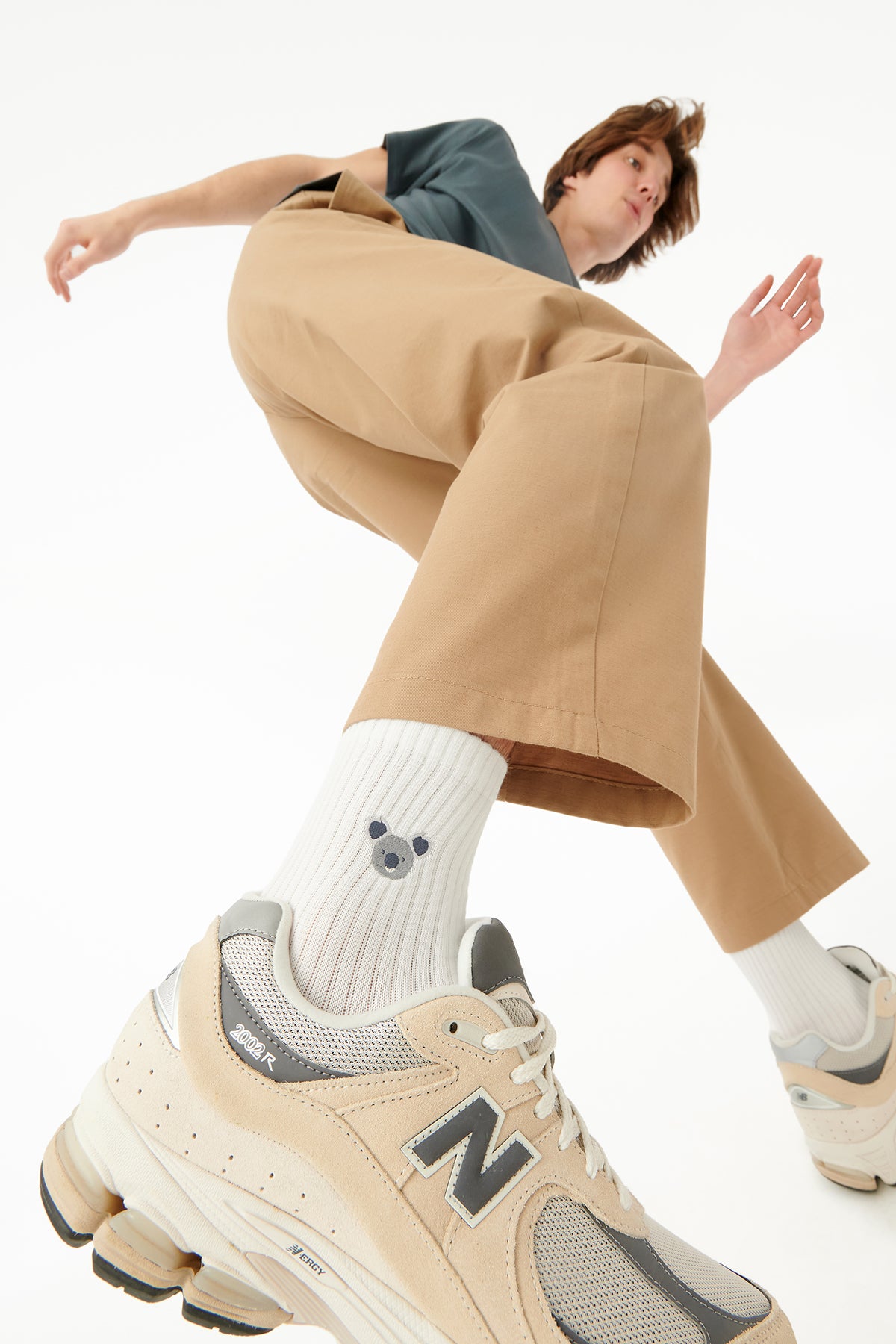
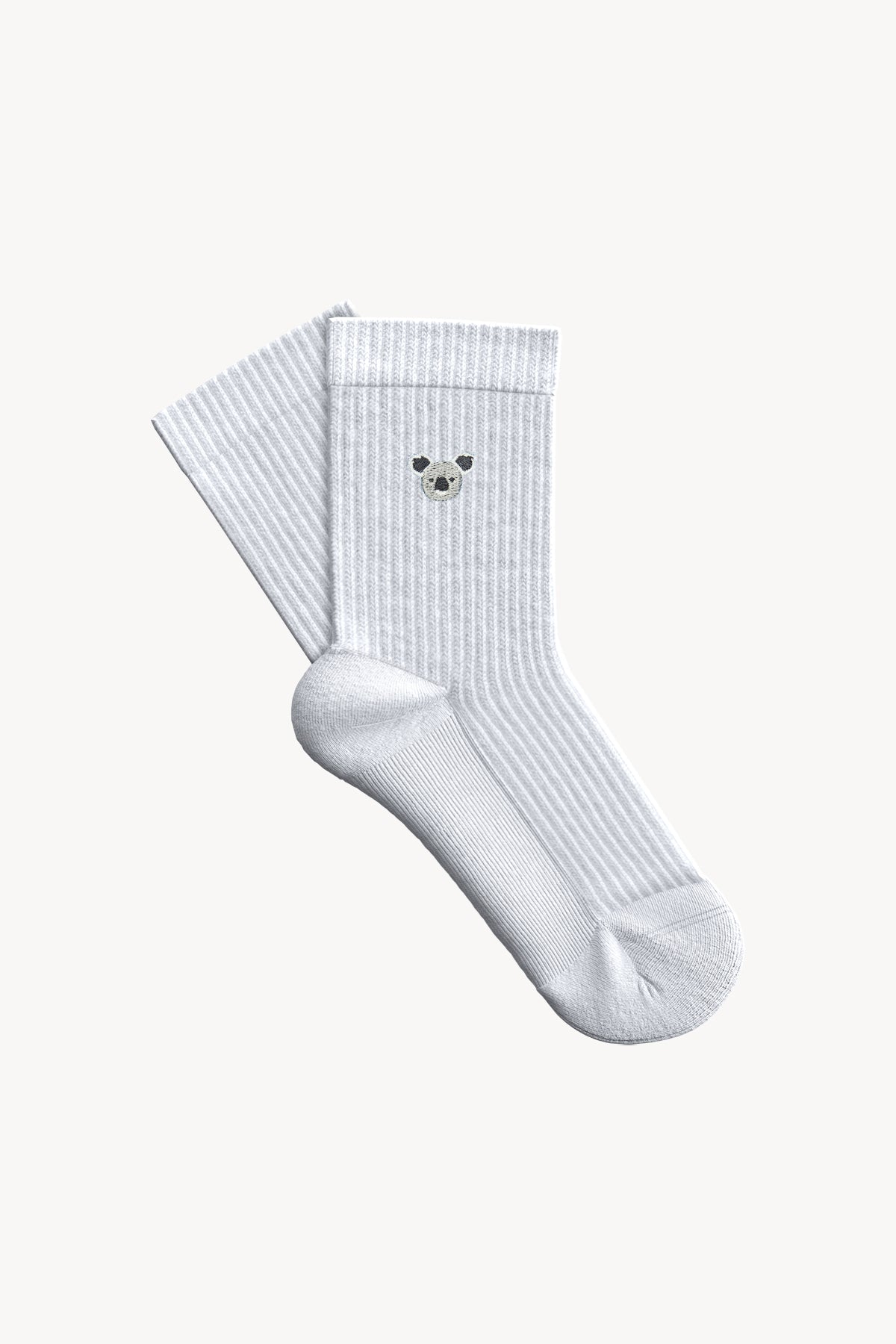



In 2025, we focused on widening our range in ways that felt aligned with our strengths.
2025 IMPACT REPORT
2025 was a year of clarity.
After building the foundations in 2024, this year was about understanding where we are strongest and operating accordingly. We focused. We simplified. We worked on making our systems more efficient and our decisions more intentional.
We expanded in merch, but in a measured way. Instead of chasing new directions, we broadened our product line in alignment with what already works for us. Our B2B side grew steadily, and we collaborated with major partners, including one of the country’s legendary sports clubs. That collaboration reflected a level of trust we have been building toward for years.
Opening our warehouse was less about physical expansion and more about operational maturity. It improved stock management, reduced lead times, and supported healthier margins. It gave us more control over our process.
Market conditions shifted throughout the year. Adapting to them required attention and discipline. In many ways, 2025 became a year of taking responsibility for our scale and learning how to manage it properly.
PRODUCT


↳ New Product Development
Last year, we developed dozens of new prototypes and presented them in our showroom as part of a more intentional R&D process. The showroom evolved into a working laboratory. It allowed us to test materials, silhouettes, and complementary categories. This approach strengthened our B2B conversations, giving partners a clearer view of our capabilities across categories.

↳ Corporate Gifting
This year marked our formal entry into corporate gifting.
We recognized that merchandise does not always live as a single garment. Especially in corporate contexts, gifting requires a more holistic approach. In response, we developed curated gift sets that combined apparel with complementary products such as chocolate, notebooks, and candles.
These additions allowed us to build complete experiences rather than isolated items. They also positioned Reflect Studio differently in B2B conversations, shifting us from being a garment supplier to a gifting partner.

↳ Make Your Own Merch
In 2025, we launched Make Your Own Merch, built on a simple principle: merchandise should not be limited by high minimum order quantities.
Through this initiative, cafés, music bands, amateur sports teams, sailing crews, and even friend groups gained access to professional production without the burden of scale. Customers select from our blank products, apply their design, and produce quickly through our internal system.
This model expanded our reach beyond traditional corporate clients. It opened the door to smaller communities and independent groups who previously could not access quality production.
Merch became more accessible, without compromising standards.

↳ Material Experiments: Upcycled Airbags
We continued exploring alternative materials.
This year, we began working with upcycled airbags with our long-time design partner Huner, developing accessory prototypes using previously used automotive safety materials. The process remains exploratory, but it reflects our ongoing interest in transforming technical waste into functional design objects.

PLANET


2025 was not a year of new certifications or headline sustainability announcements. We remained a proud B Corp, and our commitment to responsible practices continued steadily. What changed this year was not the badge. It was the way we operated.
↳ Calculating Our Carbon Footprint
As Reflect Studio, we started measuring our carbon footprint in 2021 to become one of the companies reducing carbon emissions. In 2025, we did not conduct an official third-party audit; however, we made an estimated calculation based on our operational data. This figure will serve as the foundation for a comprehensive carbon accounting in 2026.
↳ How Do We Calculate?
We calculate our corporate carbon footprint according to the globally recognized GHG Protocol (Greenhouse Gas Protocol) methodology, using the ISO 14064 standard as our reporting basis.
For 2025, we reported our carbon footprint in detail under Scope 1, Scope 2, and Scope 3 categories. Scope 1 and Scope 2 represent our company's consumption during the calculation of greenhouse gases resulting from our activities in carbon dioxide equivalent. Scope 1 refers to direct greenhouse gas emissions from the use of natural gas, diesel vehicles, generators, and air conditioning systems, while Scope 2 indicates indirect greenhouse gas emissions from electricity consumption. Scope 3 covers all indirect greenhouse gas emissions beyond Scope 2. For any organization that values transparency, counting the carbon footprint in this scope is essential for improvement and taking action.Our corporate carbon footprint for 2025 was calculated as an estimated 312.4 tons. The distribution of the carbon footprint by scope is as follows:


Our Scope 1 emissions decreased significantly compared to 2022. The main reasons for this:
↳ Transition to Hybrid Vehicles: We upgraded our company vehicles (2-3 vehicles) to hybrid models; this reduced vehicle-related emissions by approximately 40%.
↳ Electric Heating System: We transitioned to electric heating in our office and warehouse; this created a shift from Scope 1 to Scope 2.
Two main items in Scope 1's share of total inventory:
↳ Refrigerant Gases (3.21%)
↳ Company Vehicles (2.62%)
Scope 2 electricity consumption for heating, cooling, lighting, and electronic devices increased compared to 2022 due to our 6 locations (HQ, warehouse, 4 stores). However, this increase was limited thanks to warehouse consolidation.
↳ Logistics Efficiency: Warehouse Consolidation
Before 2025, we worked with a third-party warehouse company. In this model, our workflow was as follows:
Previous Process (2024 and earlier):
Factory → Interim Warehouse → Third-Party Warehouse → End Customer/Store
In this system, products were first shipped to an interim warehouse after production, then to the third-party warehouse. Since we did not have 100% control over the third-party warehouse, we experienced operational inefficiencies; moreover, each additional stop meant both time and carbon costs.
New Process (2025):
Factory → Our Own Warehouse → End Customer/Store
By opening our own warehouse in 2025, we completely eliminated the interim warehouse stop.
Estimated Carbon Savings:
In 2025, we shipped approximately 500,000 units to 2 different locations within Istanbul. In the old system, each product required an average of 1 additional intra-city movement.

This calculation only shows direct logistics savings. Beyond this:
↳ Energy consumption from waiting time at the interim warehouse decreased
↳ Operational energy savings from double loading/unloading operations were achieved
↳ Inventory management improved, waste rate decreased
This structural change was one of the most important steps that allowed us to reduce our carbon intensity (emissions per product) while our scale grew.
With the aim of transforming our end-to-end supply chain to net-zero carbon emissions, we aim to develop our value chain as an example for Turkey and the world. The topics we tracked carbon footprint under Scope 3 in 2025 were as follows:
↳ Shipping (71.24%)
↳ Kraft Envelope Packaging (12.18%)
↳ Reusable Pouches (3.42%)
↳ Courier Shipments (1.89%)
↳ FSC-Certified Gift Boxes (0.58%)
↳ Paper Consumption (0.12%)
↳ Tissue Paper (0.07%)
We have 5 main goals for 2026:
↳ Include all our stores and warehouse comprehensively in our Corporate Carbon Footprint calculations
↳ Expand our Scope 3 emission inventory to include our production processes
↳ Research carbon offsetting partnerships within the scope of Planet Project
↳ Calculate product-based carbon footprint for the top 3 best-selling products
↳ Create a roadmap for full transition to hybrid/electric vehicle fleet
A 3-Year Comparision Looked Like:


The increase in total emissions is directly related to the growth of our operational scale (60,000+ shipments vs. previous period, 6 locations vs. 4 locations). However, the 59% decrease in Scope 1 shows the effect of transitioning to hybrid vehicles and electric heating systems. The proportional increase in Scope 3 reflects the expansion of our supply chain, which also indicates the area we need to focus on in 2026.
A step closer to production (and waste) management:
As our collaboration-led model matured, so did our production logic. Moving further into a blank-based system allowed a larger share of our output to be produced closer to demand. We did not transition into full print-on-demand, but a meaningful proportion of our production became demand-driven. This shift reduced overproduction pressure and contributed to a visible downward trend in dead inventory. While we do not yet have precise measurement tools in place, the operational impact has been clear.
Energy efficiency in logistics:
Opening our own warehouse significantly improved efficiency. Previously, products moved between multiple locations before reaching final fulfillment. Production, embroidery, and storage were fragmented. In 2025, consolidating these functions under one roof simplified the chain. Fewer transfers, fewer touchpoints, tighter tracking. Beyond operational clarity, this also resulted in reduced logistical friction and improved energy efficiency across the system.
Packaging:
On the packaging side, the expansion into corporate gifting introduced a new layer of responsibility. We began offering FSC-certified premium gift boxes, with material sourcing remaining aligned with our standards. The shift reflected an understanding that sustainability must adapt to context without compromising principle.
AI for operational efficiency:
Last year, we began integrating AI into selected product photography workflows. Traditionally, a single product would travel from production to our office, then to studio, and back again for storage and distribution. Each step required transportation, energy consumption, studio lighting, equipment use, and human resources.
By using AI-supported visual production for certain categories and use cases, we reduced the need for repeated physical handling and studio setups. Not every product was photographed this way, and not every scenario was suitable. But where applicable, this shift allowed us to minimize logistical movement and lower the operational energy footprint associated with content production.
It is a small structural change, but one aligned with our broader direction: using technology not just for speed or aesthetics, but for efficiency.
PEOPLE


As our operational model evolved, it became clear that we needed a structure aligned with our current scale and focus. While HQ slightly reduced in size, the warehouse side grew to support our new system. The shift was less about expansion and more about alignment.
Organizationally, it was a year of recalibration. We continued building around clearer responsibilities and operational clarity, preparing the ground for deeper structural change ahead.
On the community side, our audience expanded organically. Through collaborations, workshops, and events we got to know new circles and communities. We hosted workshops, all of which were met with strong interest. We also launched a new interview series featuring members of our own community, creating space for shared voices rather than brand monologues.
Large-scale collaborations, including projects with Galatasaray and Manifest, brought new audiences into our ecosystem. Each partnership extended our reach beyond product and into culture.
If there is one thing 2025 reinforced, it is this:
Community grows when you create platforms, not just products.
↳ 01. Team & Inclusion
In 2024, 14 new team members joined Reflect Studio, and with a few farewells along the way, we ended the year with a crew of 35 people.
We may be smaller than in previous years, but this brought focus and clarity. Our priority became nurturing stronger internal systems and maintaining an inclusive, collaborative work environment where every voice counts — regardless of team size.
While we didn’t organize a full offsite this year, we strengthened team rituals and gave more space to cross-functional projects that brought different departments closer together.
↳ 02. Community Through Collaboration
In 2024, we didn’t just grow as a team — we grew through the people we partnered with. Working with culturally resonant brands like Socrates and MUBI allowed us to go beyond product drops and step into real-world, real-time connection.
Our collaborations became opportunities to merge communities, not just logos. We hosted gatherings that brought people together over shared interests — football, cinema, creativity — and used our Kanyon store as a living, breathing space for interaction. These weren’t just launch events. They were moments where the worlds of our partners and our customers collided, creating something larger than the sum of its parts.

↳ 03. Building Shared Culture
Our collaboration model isn’t just a creative strategy — it’s a social one. By partnering with culturally rooted institutions like Socrates and MUBI, we didn’t just co-create products; we brought together communities that may have never crossed paths otherwise. These collaborations created a sense of shared identity around meaningful topics — from sports to cinema — and helped build bridges between like-minded individuals across different cultural lanes. It reminded us that sustainability isn’t only about materials or manufacturing — it’s also about fostering long-term, values-aligned relationships between people, brands, and ideas.
When communities intersect, something powerful happens: loyalty deepens, and storytelling becomes communal. That’s what we saw in 2024. Instead of creating noise, we created meaning. The more people feel seen in what we do, the less they feel the need to buy in excess. By designing for culture, not just commerce, we’re building a business model where sustainability is scaled not through scarcity, but through shared purpose.
PARTNERSHIPS


2025 confirmed something we had been building toward for years: Collaboration is not just part of our work. It is the structure of it.
This year, our partnerships expanded both in scale and in intensity. We worked with new major cultural names such as Galatasaray, Mor ve Ötesi, Manifest, and Duman; while at the same time continuing to produce for hundreds of institutions across different sectors. Some collaborations were highly visible, others remained behind the scenes, but all of them were part of the same system.
On the merch side, the growth was unmistakable. We completed more projects than ever before. The number of incoming requests also rose significantly, and in many cases, new collaborations started with partners reaching out to us directly. This shift reflected a growing level of trust in our ability to deliver both creatively and operationally.
Merchandise continues to become a stronger communication tool for brands, clubs, and communities. As this need grows, our role has evolved from being a production partner to becoming a long-term collaborator involved from the early stages of a project. Handling this volume required stronger systems, clearer processes, and tighter coordination across teams. In that sense, partnerships did not only expand our reach. They forced us to operate with more discipline.
PROGRESS


